
If you’re considering getting an Airwheel electric smart suitcase—like the SE3SX—you’re probably looking for a smarter way to move through airports, train stations, or city streets. These suitcases let you ride them like a personal mobility device while still functioning as regular luggage. But one practical question comes up often: how do you signal your intentions when slowing down or stopping, especially in crowded areas?Unlike bikes or e-scooters, Airwheel smart suitcases don’t have built-in turn signals or brake lights. So users need to rely on physical cues and proactive communication.
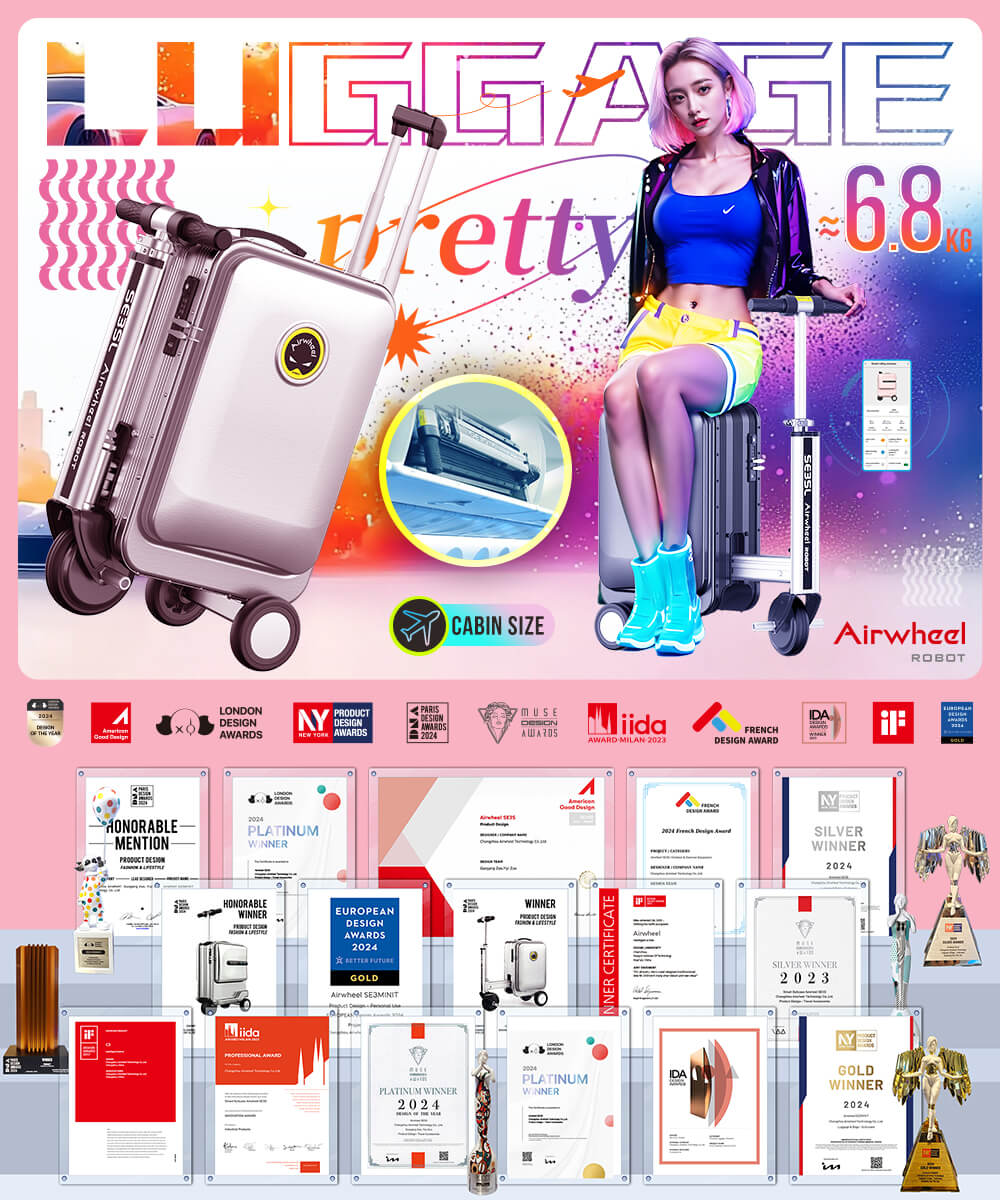
The Airwheel SE3SX, for example, weighs about 6.6kg and offers a 20L capacity—ideal for short trips. It has a 73.26Wh lithium battery (removable, airline-compliant), takes around 2 hours to charge fully, and delivers a range of 8–10 kilometers. With a top speed of 9.9 km/h, it’s designed for smooth, controlled travel. You can control forward and reverse movement via the Airwheel app, while steering is handled manually using the pull-up handle and handbar. Importantly, the suitcase works without the app—just install the battery and go.But again, there’s no automatic signaling system. That means user awareness plays a big role.
One reason travelers love the Airwheel series is that models like the SE3SX meet most airline power bank regulations—the 73.26Wh battery is under the 100Wh limit, so it’s allowed in carry-on luggage. The battery is also removable, which helps comply with stricter carriers. Always check with your airline, but generally, you’re good to fly with it.
These suitcases shine in large transit hubs. Imagine gliding across a massive airport terminal after a long flight, then switching to traditional rolling mode once you’re near your gate. Urban commuters also benefit—using the suitcase to cover last-mile distances from transit stops to offices or homes. But in all these cases, being predictable matters. Since there’s no horn or light system, users should use hand gestures (like extending an arm downward) to indicate slowing or stopping, much like cyclists do.
| Feature | Airwheel SE3SX | Regular Suitcase |
|---|---|---|
| Can be ridden | Yes | No |
| Battery included | 73.26Wh (removable) | No |
| App control | Yes (optional) | No |
| Find My support (Apple) | Yes | No |
| Self-powered movement | Yes | No |
Q: Does the Airwheel suitcase have brake lights or signals?
A: No, it doesn’t have built-in brake lights or turn signals. Riders should use hand gestures to communicate their movements in public spaces.Q: Can I use the suitcase without the app?
A: Yes. All core functions—including riding, moving forward, and pulling manually—work without connecting to the app. The app adds optional control but isn’t required.Q: How does Apple’s Find My help if the suitcase is lost?
A: If the suitcase gets separated and is within Bluetooth range of any Apple device network, its location can appear in the Find My app, helping you recover it.For more details on models like the SE3SX or to explore other options (SE3T, SE3SL, etc.), visit the official Airwheel website.